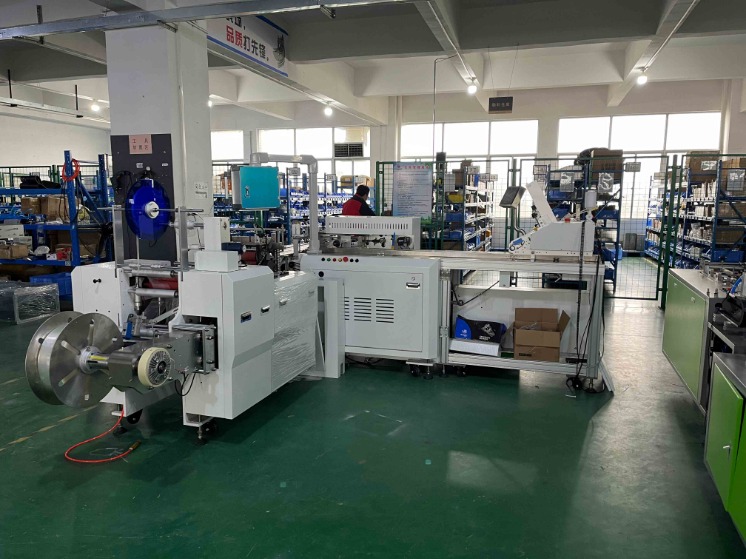
A leading packaging machinery manufacturer ensures long-term equipment durability through a combination of engineering design, material selection, precision manufacturing, intelligent monitoring, and lifecycle service. Many industrial packaging systems are designed for 15–20 years of operation, with manufacturers applying fatigue analysis, corrosion-resistant materials, and predictive maintenance technologies to reduce downtime by more than 20% in some production environments. Durability comes from controlling quality at every stage, from component sourcing to final machine validation.
Long-term equipment performance depends on measurable engineering standards rather than appearance alone. A machine that operates continuously at 200–600 packages per minute must maintain mechanical accuracy across millions of cycles.
Packaging machinery durability begins with engineering design that considers real production conditions. Manufacturers evaluate vibration, temperature variation, humidity, cleaning frequency, and repeated mechanical movement before developing a machine structure. Since many automated packaging lines operate between 4,000 and 8,000 hours annually, small design weaknesses can become major reliability issues after years of use.
Computer-aided engineering tools are widely used to improve structural strength. Finite element analysis (FEA) helps engineers identify stress areas in frames, brackets, and moving assemblies before production. In automotive, food, and pharmaceutical packaging industries, machines are often tested under conditions representing 10–15 years of expected service cycles before commercial release.
| Engineering factor | Common approach |
|---|---|
| Structural strength | Steel frame optimization and stress analysis |
| Motion accuracy | Servo control and precision mechanical components |
| Wear reduction | Improved lubrication systems and durable materials |
| Production stability | Simulation and factory acceptance testing |
The design stage directly influences material choices because every component must withstand years of repeated use. Manufacturers therefore select materials based on corrosion resistance, mechanical strength, and environmental exposure rather than initial purchase cost.
Stainless steel grades such as 304 and 316 are frequently selected for food and pharmaceutical equipment because they provide corrosion resistance during repeated washing cycles.
Material performance has a measurable impact on maintenance frequency. In facilities where machines operate under high humidity or frequent sanitation procedures, corrosion-resistant materials can extend component replacement intervals by 30% or more compared with lower-grade alternatives. A professional China packaging equipment factory, for example, typically evaluates steel quality, machining accuracy, and component compatibility before assembling industrial systems.
Beyond the machine frame, smaller components often determine long-term reliability. Bearings, motors, sensors, pneumatic systems, and sealing units must maintain consistent performance during continuous operation. A packaging line running 20 hours per day for 300 days annually may complete tens of millions of mechanical movements, making component quality essential.
Material selection supports durability, but precision manufacturing determines whether those materials perform correctly. Advanced manufacturers use controlled machining processes and inspection procedures to maintain consistent tolerances across thousands of parts.
A difference of only 0.05 mm in positioning accuracy can influence sealing quality, filling precision, and product consistency in high-speed packaging applications.
Modern production facilities commonly use CNC machining, automated measurement equipment, and digital quality management systems. Each machine assembly may pass multiple inspection stages, including dimensional checks, electrical testing, safety verification, and operational trials.
Many manufacturers perform factory acceptance testing (FAT) before shipment. During FAT procedures, machines are tested with actual or simulated production materials to evaluate speed, stability, noise, and energy consumption. Some suppliers conduct continuous operation tests lasting 24–72 hours before delivery to customers.
Quality control also involves documenting manufacturing data. Serial numbers, component specifications, maintenance records, and inspection results allow service teams to identify replacement requirements faster. This approach improves service efficiency throughout the machine lifecycle.
Reliable manufacturing creates a strong foundation, but modern equipment also requires intelligent systems to maintain performance over time. Digital monitoring technologies have become increasingly common since the early 2010s, when industrial automation systems began collecting larger volumes of machine operating data.
Sensors installed on packaging equipment can measure vibration, temperature, pressure, motor status, and production speed. These measurements allow operators to identify unusual conditions before production quality decreases.
Predictive maintenance programs can reduce unexpected equipment downtime by approximately 10%–30%, depending on machine complexity and operating conditions.
A typical intelligent packaging system may collect thousands of data points every hour. Software platforms analyze this information and provide maintenance recommendations based on operating trends. For example, increasing motor temperature may indicate lubrication problems, while abnormal vibration levels may suggest bearing wear.
| Monitoring area | Measured information |
|---|---|
| Motors | Temperature, current, operating hours |
| Mechanical parts | Vibration and movement accuracy |
| Production system | Speed, output, error frequency |
| Control system | Sensor status and alarm records |
Intelligent monitoring improves maintenance planning, but equipment flexibility also affects service life. Packaging industries frequently introduce new product sizes, materials, and formats. Machines designed only for one production requirement may become outdated even when the mechanical structure remains usable.
Manufacturers increasingly develop modular equipment architectures. Replaceable filling systems, adjustable conveyors, and programmable control systems allow machines to support future production changes without complete replacement.
For example, a packaging machine installed in 2018 may continue operating in 2026 if its control software, sensors, and mechanical modules can be upgraded. Modular design reduces equipment replacement frequency and allows manufacturers to support changing market requirements.
A machine with upgradeable modules can often remain productive for several additional years compared with a fixed-design system.
Long service life also depends on maintenance practices after installation. Even advanced machinery requires regular inspection, lubrication, software updates, and operator training. Manufacturers with global service networks provide maintenance schedules based on operating hours, production volume, and environmental conditions.
A typical preventive maintenance plan may include:
-
Daily inspection of sensors and moving parts
-
Monthly checking of lubrication systems and fasteners
-
Quarterly review of electrical components
-
Annual replacement assessment for high-wear parts
Service data from industrial equipment suppliers shows that planned maintenance programs can improve machine availability by 5%–15% compared with repair-only approaches. Proper training also reduces operating mistakes that may accelerate component wear.
After-sales support extends equipment durability because replacement parts and technical assistance remain available throughout the machine lifecycle. Manufacturers that maintain detailed component records can provide faster solutions when customers require repairs.
Equipment durability is measured over years of production, not only by performance on the first day of installation.
The packaging industry continues to move toward higher automation, improved energy efficiency, and longer equipment service periods. Between 2020 and 2025, many manufacturers increased investment in digital controls, remote diagnostics, and energy-saving components to meet stricter industrial requirements.
Long-term durability now depends on combining mechanical reliability with software capability. A well-designed packaging machine must maintain accuracy, reduce maintenance needs, and adapt to future production changes.
Manufacturers that integrate engineering analysis, high-quality materials, precision production, intelligent monitoring, and professional service systems create equipment capable of supporting stable industrial operations for many years. A durable packaging machine is built through continuous improvement across design, manufacturing, installation, and maintenance processes.