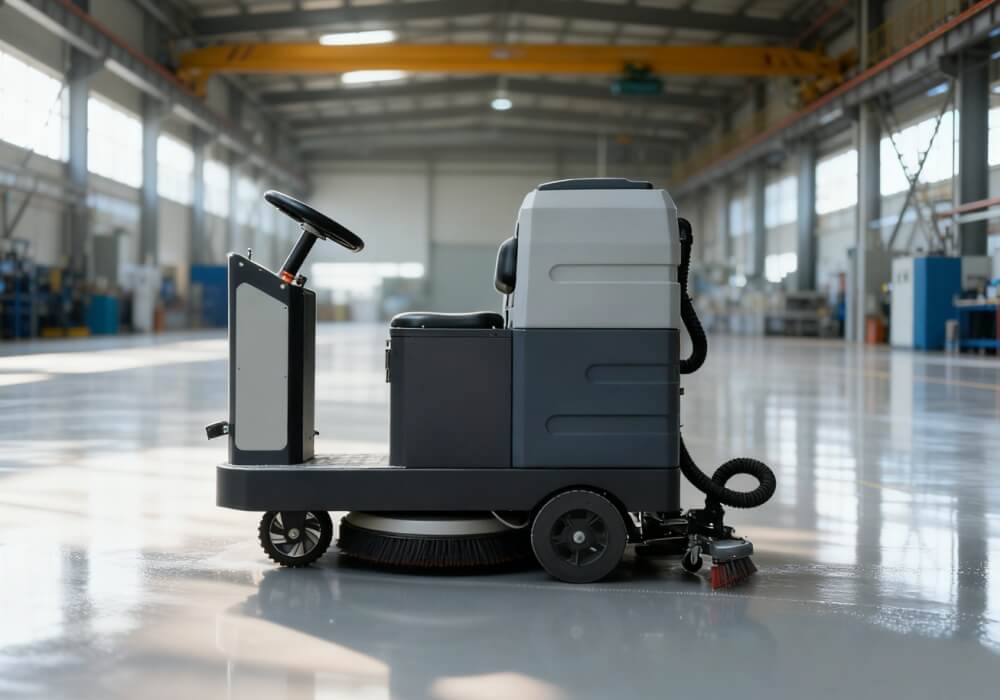
Hospitals require floor cleaning equipment that can maintain hygiene standards while handling continuous foot traffic. A professional hospital floor cleaning machine can combine scrubbing, water recovery, and drying functions, allowing healthcare facilities to clean large areas faster than traditional manual methods. Many modern scrubber dryers achieve cleaning productivity above 1,000–3,000 m² per hour depending on size, while reducing water usage by approximately 20–40% compared with conventional cleaning processes.
Hospital corridors and public areas are among the most frequently used spaces in medical facilities. These areas experience movement from patients, healthcare workers, visitors, and equipment throughout the day. A cleaning system designed for healthcare environments must manage dust, liquid spills, surface marks, and frequent sanitation requirements without interrupting normal hospital operations.
A report from healthcare facility management studies published after 2020 showed that high-traffic areas often require multiple cleaning cycles per day, especially around entrances, waiting rooms, and corridor intersections. Facilities built with large public zones may have tens of thousands of square meters of flooring requiring regular maintenance.
“Floor cleaning in healthcare environments is not only about appearance. The equipment must provide consistent cleaning results while allowing staff to work around patients and medical activities.”
The growing demand for efficient cleaning methods has increased the use of automatic floor scrubber dryers in hospitals, clinics, and long-term care facilities. Compared with traditional mop cleaning, these machines provide controlled water distribution, mechanical brushing pressure, and immediate wastewater collection.
Hospital floors are commonly made from vinyl, linoleum, ceramic tile, epoxy resin, or polished concrete. Each material has different cleaning requirements. For example, vinyl flooring used in many patient areas requires controlled brush pressure to prevent surface damage, while textured safety flooring may require stronger agitation to remove embedded dirt.
The selection of equipment should consider several operating factors:
| Requirement | Recommended Feature |
|---|---|
| Long corridors | Wide cleaning path and large water tanks |
| Patient areas | Low-noise operation below approximately 70 dB |
| Frequent cleaning schedules | Long battery runtime |
| Tight spaces | Compact turning radius |
| Safety-sensitive zones | Efficient water recovery system |
A hospital cleaning machine with a wider cleaning path can reduce the number of passes required. A model with a 50–70 cm cleaning width may cover significantly more floor area than small manual equipment, especially in facilities operating 24 hours per day.
Battery technology has also changed hospital floor maintenance. Many machines produced after 2020 use lithium-ion battery systems that provide several hours of operation per charge. Compared with older lead-acid batteries, lithium-ion designs generally offer shorter charging times, longer service life, and reduced maintenance requirements.
Noise level is another important consideration because hospitals operate continuously. Equipment producing excessive sound can disturb patient rest, consultations, and medical procedures. Many commercial scrubber dryers are designed to operate between 60 and 75 dB depending on working mode.
“A quieter cleaning process allows staff to maintain sanitation routines during normal hospital hours without creating unnecessary disturbance.”
Water management is also important because hospital floors often need to return to service quickly after cleaning. Traditional wet mopping may leave moisture on surfaces for several minutes, while automatic scrubber dryers use suction systems to collect wastewater immediately after brushing.
A machine with efficient recovery performance can reduce remaining water on floors and lower the chance of slip incidents. Some professional models recover more than 90% of applied cleaning solution when properly maintained and operated.
The type of machine selected depends on the size and layout of the healthcare facility. Smaller clinics may prefer compact walk-behind units, while large hospitals with extensive corridors often use larger ride-on scrubber dryers.
Common equipment categories include:
| Machine Type | Typical Application |
|---|---|
| Compact scrubber dryer | Clinics, elevators, small corridors |
| Walk-behind scrubber dryer | Patient floors, outpatient departments |
| Ride-on scrubber dryer | Large hospitals, public halls, parking areas |
Walk-behind machines remain widely used because they balance cleaning performance with flexibility. Operators can move around beds, chairs, and equipment without requiring large operating space. In facilities with thousands of daily visitors, these machines allow cleaning teams to respond quickly to high-use areas.
Ride-on machines are suitable for larger healthcare facilities. Their higher productivity allows operators to clean extensive floor areas within scheduled maintenance periods. Some industrial models can exceed 5,000 m² of cleaning coverage per hour under suitable conditions.
Public areas such as hospital entrances and waiting rooms require additional attention because they receive visitors throughout the day. Studies of healthcare environments after 2018 have shown that entrance zones often collect higher levels of tracked-in soil compared with restricted areas because outdoor particles enter through footwear.
For these areas, machines with strong brushing systems and efficient debris collection are preferred. Cleaning frequency also depends on weather conditions, visitor numbers, and facility design.
Maintenance procedures influence cleaning performance over time. A machine used daily in a hospital environment should receive regular inspection of brushes, squeegees, filters, batteries, and recovery tanks.
A basic maintenance schedule may include:
-
Daily cleaning of recovery tanks and brushes
-
Weekly inspection of suction components
-
Monthly battery and mechanical checks
-
Replacement of worn pads according to manufacturer recommendations
Poor maintenance can reduce cleaning efficiency and increase operating costs. For example, worn brushes may require more passes to achieve the same result, while blocked suction channels can leave excess water on floors.
Healthcare facilities should also consider operator training. Even advanced equipment requires correct settings for water flow, brush pressure, and cleaning speed. Proper training can improve machine lifespan and reduce unnecessary chemical consumption.
Chemical usage is another area where modern machines provide better control. Automatic dispensing systems can deliver measured amounts of detergent instead of relying on manual mixing. Depending on facility procedures, controlled dispensing may reduce cleaning solution consumption by around 15–30%.
The following factors are often reviewed before purchasing equipment:
| Evaluation Area | Questions to Consider |
|---|---|
| Floor material | Is the machine suitable for vinyl, tile, or resin flooring? |
| Area size | How many square meters require daily cleaning? |
| Operating schedule | How many cleaning cycles are needed each day? |
| Storage | Is there enough space for charging and maintenance? |
| Noise requirements | Can cleaning occur during patient hours? |
Hospitals also need to consider infection prevention procedures when selecting cleaning equipment. Machines should have designs that allow easy cleaning of tanks, brushes, and contact surfaces. Components that accumulate residue may reduce overall cleaning quality if they are not maintained properly.
The use of automated floor cleaning equipment has increased as healthcare providers continue improving facility management standards. A 2023 healthcare operations review reported that many hospitals were investing in mechanized cleaning tools to improve staff efficiency and maintain consistent environmental hygiene.
Different facilities require different equipment combinations. A large medical center may use ride-on machines for main corridors, walk-behind units for patient floors, and compact cleaners for small treatment areas.
More information about equipment designed for medical environments can be found through this hospital floor cleaning machine solution designed for healthcare floor maintenance.
Choosing suitable floor cleaning equipment helps hospitals maintain cleaner public spaces while improving daily maintenance efficiency. Factors such as cleaning capacity, water recovery, noise control, machine size, and maintenance requirements should all match the facility’s actual operating conditions. A properly selected machine can support routine cleaning tasks across corridors, waiting rooms, entrances, and other high-use hospital areas while allowing healthcare staff to focus on patient services.