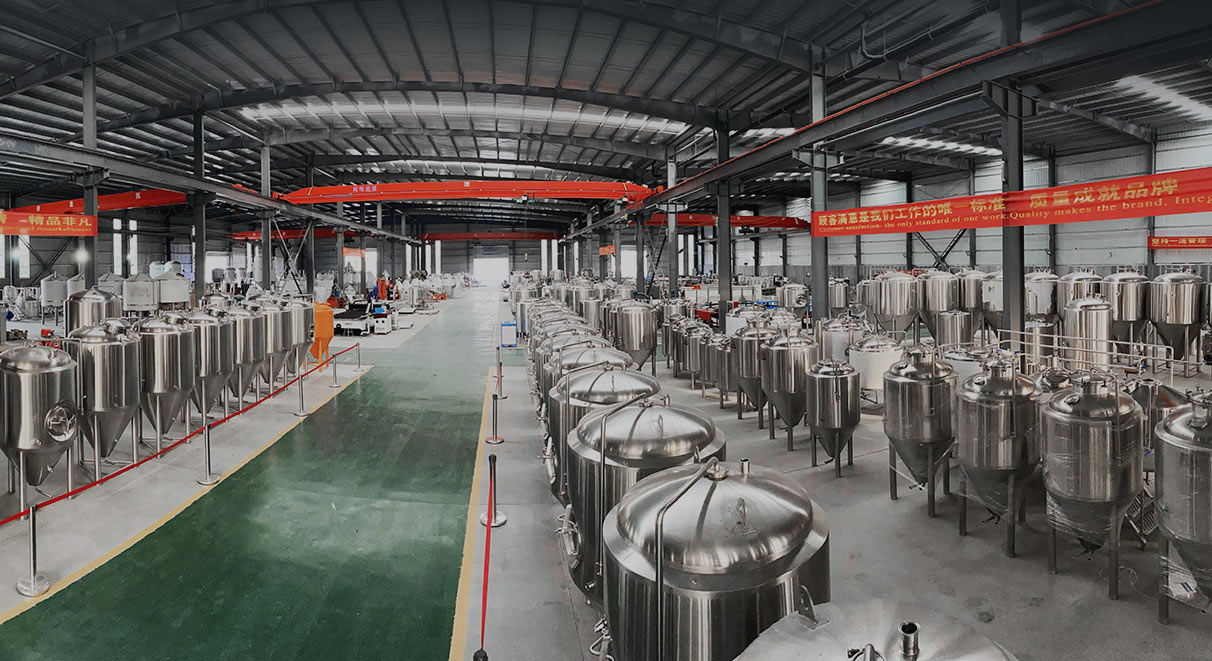
A turn-key brewery solution reduces launch work by placing brewhouse sizing, fermentation capacity, refrigeration, piping, CIP, controls, utilities, installation, and commissioning under one coordinated equipment plan. In 2024, U.S. craft brewers produced 23.1 million barrels while 529 craft breweries closed and 430 opened, so new facilities enter a market where poor equipment sizing is difficult to absorb. A correctly planned 10-bbl brewhouse, for example, must be matched with enough fermentation volume, cooling capacity, hot-water storage, cleaning flow, and packaging throughput. Turn-key supply reduces the number of technical interfaces an owner must manage before the first commercial batch.
The equipment list is only one part of brewery construction. A working plant connects the mill, mash and lauter vessels, kettle, whirlpool, heat exchanger, fermenters, bright tanks, glycol loop, water system, pumps, valves, compressed gas, drains, electrical panels, controls, and packaging area. A U.S. beer barrel equals 31 gallons, so a 10-bbl batch represents 310 gallons before losses, while a 30-bbl system starts with a production unit three times larger. That scale immediately changes pipe diameter, pump flow, heating demand, cooling demand, floor loading, and tank quantities.
Capacity planning therefore starts with production frequency rather than vessel price. A 10-bbl brewhouse used twice per day for four brewing days can theoretically send 80 bbl of wort into the cellar each week. If a typical beer occupies a fermenter for 14 days, production already requires enough available cellar volume for roughly 160 bbl before allowing for conditioning time, cleaning, scheduling gaps, or slower-fermenting products. Adding a larger brewhouse without matching cellar space simply moves the capacity limit downstream.
A useful equipment schedule works backward from sellable beer: annual barrel target → weekly batches → fermentation days → tank occupancy → packaging volume → utility demand.
Cellar design then affects refrigeration. Fermentation generates heat, crashed beer must be cooled, and several tanks can call for glycol at the same time. The Brewers Association's draught guidance places finished beer around 36–38°F and notes glycol-system operating ranges commonly around 28–34°F, although production tank requirements depend on the process and equipment manufacturer's specifications. A turn-key design can size the chiller, reservoir, pumps, jacket areas, supply headers, and return lines from the planned tank schedule instead of selecting a chiller from fermenter volume alone.
The same approach applies to heating. The Brewers Association energy manual reports typical brewery electrical use of about 12–22 kWh per barrel and thermal natural-gas use of roughly 1.3–1.5 therms per barrel in the referenced industry ranges. A brewhouse running several turns per day needs enough steam, electric heating capacity, or another specified heat source to raise liquor and wort temperatures without extending the production day. Heating equipment, electrical service, steam piping, ventilation, and condensate handling should therefore be defined before fabrication drawings are approved.
Utilities also expose why purchasing tanks one by one can create expensive site work. In a Brewers Association benchmarking set for breweries producing 10,000–100,000 bbl per year, 26 breweries had a median water-use ratio of 5.3 bbl of water per bbl of packaged beer. The same dataset included 28 breweries for electricity, with a median of 22.4 kWh/bbl. Those samples are not universal design standards, but they show how production volume translates into substantial water, wastewater, and electrical requirements.
For a facility planning 10,000 bbl per year, a 5.3:1 water ratio would equal about 53,000 bbl, or roughly 1.64 million U.S. gallons of water annually. Actual use can differ considerably with brewhouse design, cleaning practice, packaging format, and site efficiency. Designing water connections and drainage from equipment nameplate requirements alone can therefore underestimate peak use. Turn-key engineering can map simultaneous users such as mash-in water, tank cleaning, keg washing, hose stations, and packaging equipment before plumbing work begins.
Cleaning deserves the same level of calculation. CIP performance depends on flow velocity, pump capacity, spray-device requirements, chemical concentration, temperature, pipe geometry, and return flow. A fermenter that holds 20 bbl does not automatically require the same cleaning flow as another 20-bbl tank with different height, spray hardware, or piping. An integrated supplier can specify CIP pumps, supply and return lines, chemical tanks, valves, and tank spray devices as one sanitary circuit rather than leaving the installer to connect them after delivery.
| Area | Engineering question | Example planning input |
|---|---|---|
| Brewhouse | How many batches can be produced per day? | 10, 20, or 30 bbl per turn |
| Cellar | How long is each tank occupied? | 10–21+ days by product |
| Refrigeration | How many tanks may cool together? | Fermentation plus cold crashing |
| Water | What is peak simultaneous demand? | Brewing, CIP, packaging |
| Electrical | What equipment can run together? | Chiller, pumps, mill, filler |
| Packaging | Can filling keep pace with production? | Cans, bottles, or kegs |
Layout becomes easier once those loads are known. Tank diameter, overall height, manway access, valve position, platform height, pipe corridors, floor drains, door dimensions, and maintenance clearance can be placed on the same drawings. A 60-bbl fermenter may fit the floor footprint but still fail to pass through an existing doorway or clear the roof structure during installation. Solving that problem in a CAD layout is far cheaper than changing a finished building after the tank arrives.
A Brewery/Distillery/Winery All-In-One Solution can also reduce specification mismatches between separate packages. Pumps need compatible sanitary connections; temperature probes need inputs accepted by the control panel; variable-frequency drives must match motor ratings; automated valves need appropriate air and signal connections; heat exchangers need specified flow and pressure conditions. With separate purchasing, responsibility for every interface can move between vendors. An integrated scope assigns those interfaces before manufacturing.
Controls are particularly sensitive to incomplete planning. A semi-automatic 2026 brewery might use PLC control for pumps, temperatures, glycol valves, hot-liquor heating, brewhouse steps, alarms, and recipe settings while keeping ingredient additions and several transfers manual. A larger plant may add automated valve manifolds, flowmeters, level measurement, batch records, and CIP sequences. Automation should match staffing and brewing frequency; adding actuated valves everywhere provides little benefit when operators still need to make frequent manual hose connections.
Commissioning tests whether that engineering works under operating conditions. Water trials can check vessel leaks, pump rotation, valve positions, flow paths, temperature readings, heating response, cooling response, emergency stops, and control sequences before wort enters the equipment. For a plant containing 8 fermenters, 2 brewhouse vessels, 2 liquor tanks, a CIP station, dozens of valves, several pumps, and hundreds of sanitary connections, testing systems by section makes faults easier to locate than discovering them during the first production week.
Documentation should arrive with the equipment rather than being assembled later. Useful files include P&IDs, tank drawings, electrical diagrams, component lists, utility schedules, valve identification, PLC I/O lists, equipment manuals, preventive-maintenance intervals, and spare-parts references. TTB reporting and operating requirements also need to be handled separately from equipment supply; its beer statistics and reporting resources were still being updated in August 2026. Local building, fire, electrical, wastewater, food, and alcohol rules still depend on the project location.
Market conditions make disciplined sizing more important. The Brewers Association recorded 9,796 operating U.S. craft breweries in 2024, including 2,029 microbreweries, 3,552 brewpubs, 3,936 taproom breweries, and 279 regional craft breweries. Craft production was 23.1 million bbl, down 3.9% from 2023, while craft volume represented 13.3% of the U.S. beer market. Building excess capacity therefore needs a commercial reason rather than an assumption that production will automatically fill it.
The equipment plan can instead leave measured room for later additions. A brewery opening with six fermenters might reserve floor positions, glycol header connections, control-panel outputs, electrical capacity, and pipe branches for another four tanks. Spending on every future vessel during the first phase is unnecessary; providing connection points during initial construction can avoid cutting finished pipework and reopening walls two years later.
Expansion planning works best when the expensive-to-rebuild infrastructure is prepared first and removable equipment is added when sales require it.
Packaging needs similar restraint because nominal filler speed does not equal finished hourly output. Can or bottle handling includes depalletizing or loading, rinsing, purging, filling, seaming or capping, coding, labeling, packing, cleaning, and changeovers. A line rated at 30 cans per minute has a theoretical rate of 1,800 cans per hour, but scheduled stops and product changes reduce actual output. Tank size and packaging-day volume should be compared with realistic operating hours rather than brochure speed alone.
Quality control continues after installation. Brewers Association draught guidance recommends line cleaning on a roughly 14-day cycle and identifies 36–38°F as a normal keg-cooler and dispense temperature range. The same operating discipline belongs upstream: calibrated temperature sensors, defined CIP procedures, inspection schedules, sanitary sampling points, recorded fermentation temperatures, and documented maintenance make repeatability easier as staff numbers and batch frequency increase.
Supplier comparison should finally be made against scope rather than the number beside the quotation. One proposal may include tanks but exclude glycol piping, electrical installation, steam generation, freight, commissioning, insulation, platforms, controls, or packaging connections. Another may include equipment drawings but leave building drains and utility drops to local contractors. In 2024, 529 U.S. craft breweries closed while 430 opened, with the Brewers Association estimating a closure rate of about 5%. A launch budget should therefore identify every responsibility before purchase orders are signed, including installation boundaries, utility loads, commissioning work, operator training, spare parts, warranty response, and expansion provisions.